On the Speed of the Post-human
#essay
Introduction
Today, the Department of Astronomy hosted a lecture by Professor Dong-shin Yi from the Department of English Literature. While not a common occurrence, experts from different fields occasionally give informal talks in our department.
Post-human
The presentation began with a problem posed by the final scene of the movie The Flash. A dog is shown falling from an exploding building in extreme slow motion. Amidst the chaos of flying debris and falling burgers, the dog sticks out its tongue, trying to catch a snack. While children are also falling through the frame, the camera tracks the descent specifically from the dog's perspective. In the background, moving at a completely different velocity, is the protagonist, Flash—endowed with a singular, transcendental speed. Flash safely catches the children and the dog, and the scene concludes.

This existence of vastly different speeds—where one entity falls alongside inanimate objects while another diagnoses the world at a transcendental velocity—is this merely a cinematic special effect? The core of this presentation was that it is not. Within the realms of post-humanism and accelerationism, our temporalities flow in discriminatory ways.
As an example of this "differential time" coupled with capitalism, "High-Frequency Trading" (HFT) was introduced. This refers to the technique of using computers to capture microscopic fluctuations in stock prices that are imperceptible to the human reaction speed. The problem arises from technological disparity: a socioeconomic class divide emerges between those who possess the technology to detect nano-second fluctuations via fiber-optic cables and those who do not. The former uses this technological superiority to sweep up capital at a speed entirely different from the time experienced by ordinary citizens. The latter, unable to keep up with the pace of technological advancement, is left to accept this phenomenon helplessly, much like the falling dog.
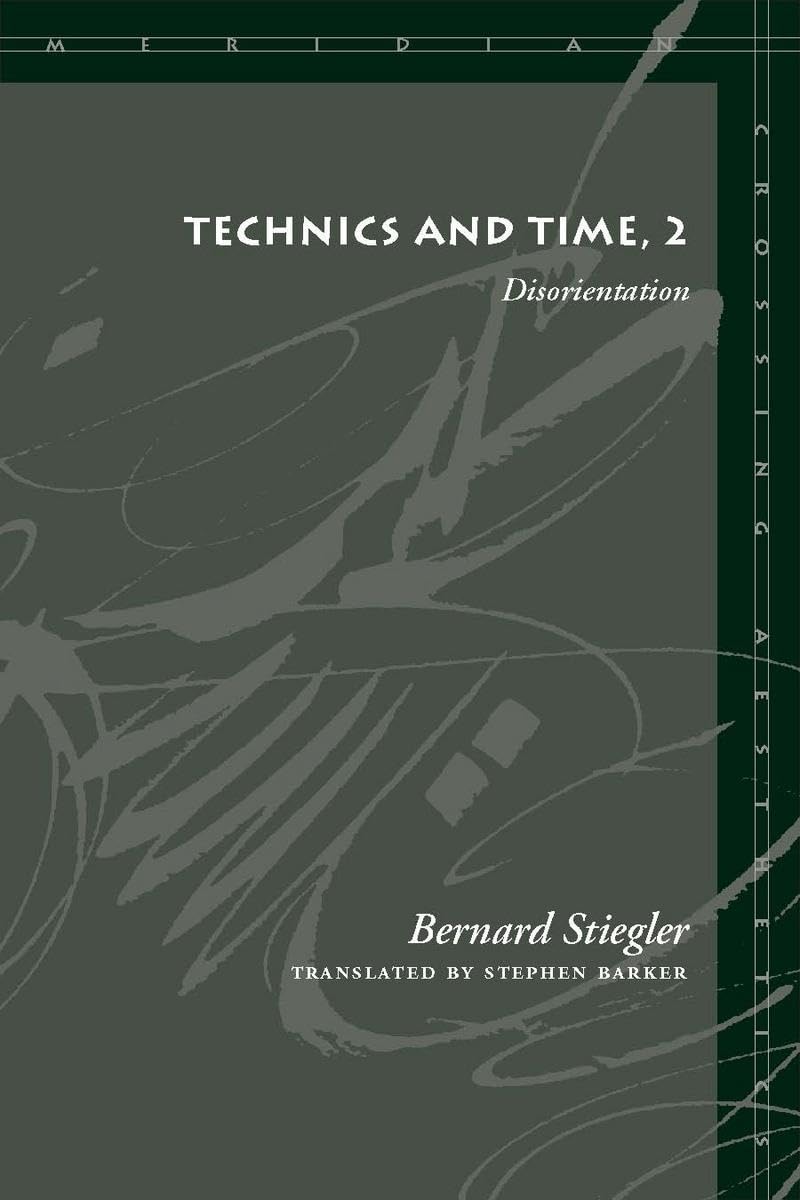
At this point, Bernard Stiegler’s Technics and Time was introduced. The significance of this title becomes clearer when placed alongside Heidegger’s Being and Time. While Heidegger spoke of the human as a being who experiences time through the realization of death, Stiegler attempts to define the human as a "technical being"—one who experiences time through technology.
Moving a step further from the "technical being," we discussed Nick Land’s A Quick-and-Dirty Introduction to Accelerationism. Land explains the various absurdities arising from speed differentials as a result of human society not having "accelerated" enough. In this text, which can be seen as an eulogy for accelerationism, Land points to the limits of the physical body as the reason humans fail to accelerate. He suggests that if the human soul could be compressed into a single chip to live in a digital world, a world of infinite acceleration would be possible, ushering in a utopia.
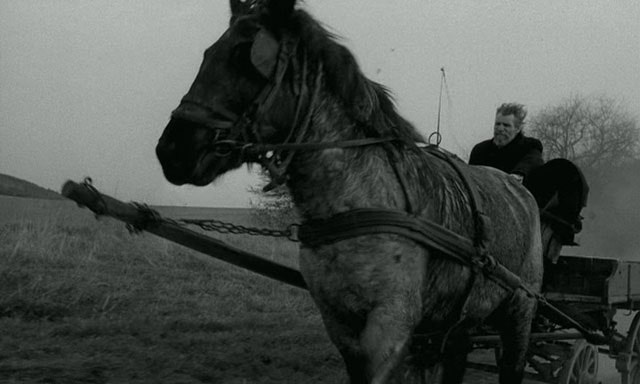
Of course, the theme of this lecture did not align with such a claim. The idealism of accelerationism has already exposed its limits and produced side effects throughout society. Furthermore, a counter-discourse has persisted: that the body is not a mere limitation to be overcome, but an essential part of human nature inseparable from the mind. One such proponent is N. Katherine Hayles in How We Became Posthuman, where she links the concept of the "embodied entity" to the temporality we experience. Her methodology involves "de-centering" humans by looking at the "time of animals." The special status humans granted themselves as the sole perceivers of time was only possible by positioning animals as the "other." However, the moment we pay attention to the temporality of animals, that special status begins to crack.
Thingness
In this discussion, Hito Steyerl’s "Free Fall" thought experiment came to mind. As long as one deals with the temporality of objects, Steyerl’s logic is inextricably linked to post-human discourse. A free fall begins with "groundlessness." The moment we lose what we firmly believed to be the ground, we begin to fall freely alongside all other objects. The problem is that in this process, we cannot know where we are falling. We cannot distinguish the present moment from the sensation of floating in an empty space, even as we fall incessantly.
Thus, a certain "thingness" (objecthood) is inherent within us. This resonates with Hayles’ assertion that "we didn't become post-human; rather, we discovered we were always post-human." Then, what is the "time of objects"? That becomes the ensuing question.
The Imaginary Nature of Time
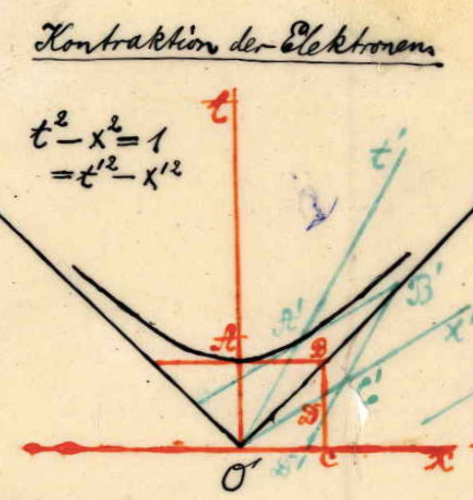
The story becomes more interesting if we make the aggressive declaration that "the time of objects does not exist." This can lead to the claim that "human time" does not exist either. In modern science, physicists who argue that time does not exist are not a rare breed. Carlo Rovelli wrote a book titled The Order of Time (often translated/referenced as Time Does Not Exist in certain contexts). The "imaginary" nature of time can be proven in both quantum physics and relativity. In relativity, many formulas are easily derived simply by attaching the imaginary unit i to the time axis of space-time. While attaching i to the time axis is a technique for mathematical convenience, philosophically, it is equivalent to declaring that time is "imaginary." The sensation of accepting this declaration is no different from the sensation a human feels when discovering their own internal "thingness."
Are Relativity and Imaginary Time Contradictory?
However, it is worth considering whether the declaration that time does not exist conceptually nullifies the speed differentials of the post-human era mentioned at the beginning. The difference in the perception of speed caused by technological advancement is real, as seen in the case of high-frequency trading. In more moments of daily life, speed differentials caused by technology are occurring, and they are functioning as a social class divider coupled with capital.
Someone, like Flash among the free-falling dogs, treats others as objects and purchases a unique status, thereby "feeling" their humanity. To them, it seems as if they alone possess the ground that we have lost. From the perspective of the human relegated to an object, there is no ability to return those moving at transcendental speeds to the same "object status" as themselves. In this moment, a familiar sensation returns—as if time is not an "imaginary" number (i), but a "real" number.
However, one thing to consider is that those moving so fast are not granted more "leisure time." (Usually, such people live their lives being chased by time!) Who exactly are they faster than? At the point where this target cannot be specified, their own free fall begins as well. The moment a status is guaranteed where one can treat others as objects through their superior speed, they cannot deny the fact that the emergence of someone even faster will immediately turn them into an object.
At this juncture, as Hito Steyerl emphasized, an attitude of "willingly becoming an object" becomes necessary. Flash is a superhuman the moment he zips through spaces, but he becomes an object (a dog-catcher/stand) the moment he catches the falling dog. We can escape this illusory race only when we stop accelerating.
In a society where the technological gap is widening uncontrollably, we witness once again the moment when the competition for capital becomes the law of the jungle. Depending on how much "rent" one can pay to an AI, their social performance becomes visibly differentiated, and no one is free from the fear of death that comes with falling behind. Why must we reach out our hands to the falling dogs at this moment? Because that is what makes the post-human "human" again.
in addition
-
During the Q&A, Professor Yi asked, "If given the chance, would you go to Mars?" Since he was at the Astronomy department, it was a lighthearted question, but I raised my hand for "Yes." Of course, that answer is independent of whether I actually could go to Mars. Heidegger said the fear of death makes a human "human," but the opposite declaration is also logically sound: a human becomes human only by embracing death. If there is an opportunity to put one's life at risk, one should not avoid it. With the same heart as catching a falling dog.
-
We also happened to discuss human intelligence, though most of it was irrelevant to the main text and is omitted here. One interesting topic, however, was the question: "If the perception of time is a matter of intelligence, do smart monkeys also perceive time?" This kind of problem always harbors a trap: what exactly is a "smart monkey"? The moment you treat intelligence as a metric that can be ranked, various contradictions and fallacies emerge. At this point, the professor cited Frans de Waal’s Are We Smart Enough to Know How Smart Animals Are?. "Smart" or "dumb" monkeys only exist within a specific frame of the spatio-temporal moments that humans capture. It is just another acceleration race. The moment we stare at the indicators of intelligence we once believed in, the vertigo of groundless free fall envelops us once again.